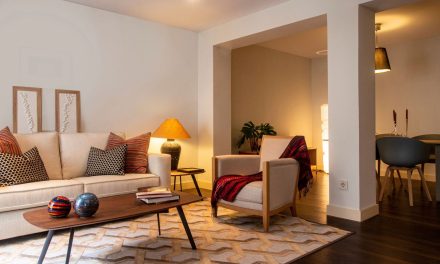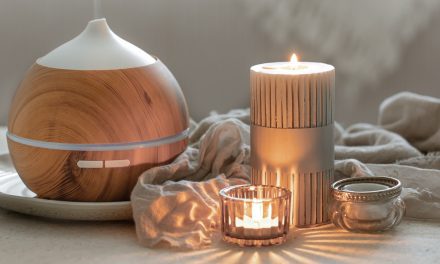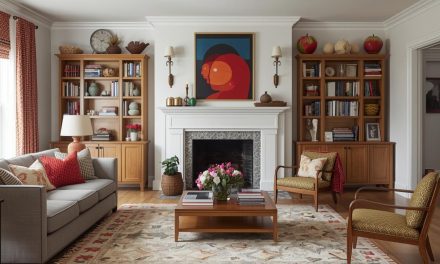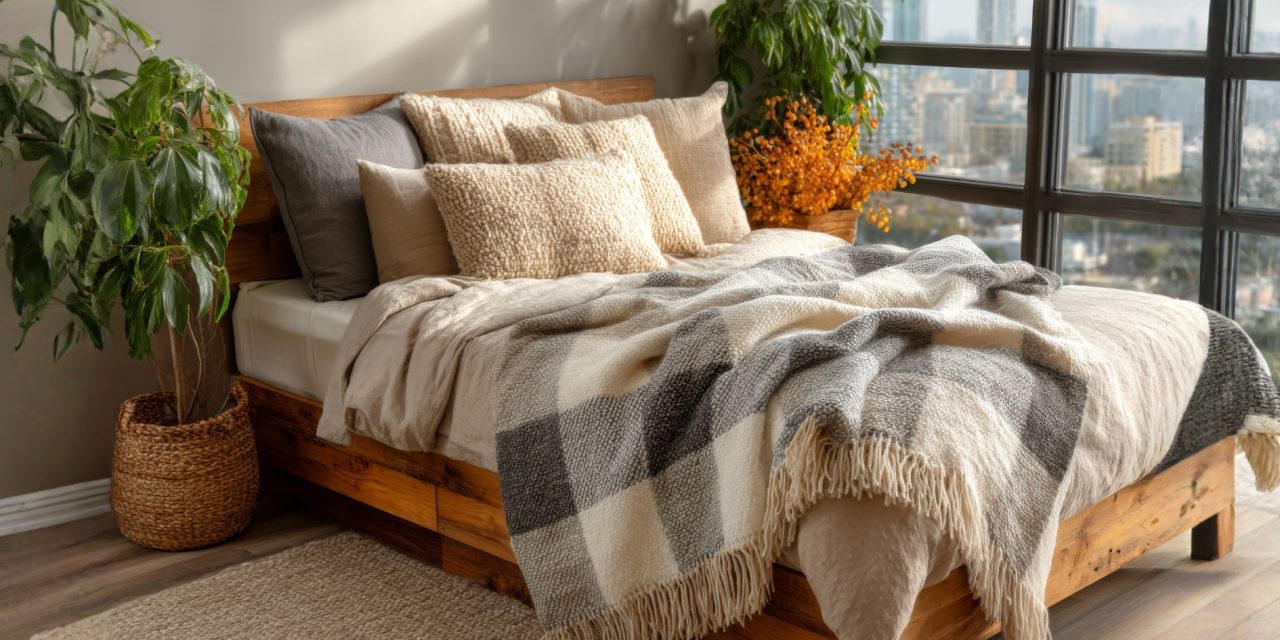
Neutral interiors look elegant, but without texture they can feel flat. Layering tactile elements adds depth, softness, and warmth without changing your color palette. When done intentionally, texture turns minimal spaces into inviting, lived-in homes.
Follow the 60-30-10 texture rule for balance. Use 60% coarse textures like jute rugs to ground the room. Add 30% medium textures such as linen or wool for softness. Finish with 10% smooth accents like glass or ceramic for subtle contrast and shine.
Start with a coarse base layer on floors or larger furniture pieces, such as woven jute or rattan. Add medium layers next, including linen curtains or bouclé throws, to introduce movement and comfort. Finish with smooth accents like ceramic vases, brass hardware, or glass decor to refine the look.
Experts recommend mixing organic textures in beige decor or gray interiors to avoid sterile minimalism. The result is warmth you can both see and feel.
Sheer Linens and Velvet Mixes
Few combinations soften a room faster than linen and velvet.
Gauzy linen curtains diffuse harsh daylight and create gentle movement. Hanging them 8–12 inches above the window frame elongates walls and adds elegance. Pair them with velvet pillows for depth and subtle sheen against flat taupe or gray walls.
For accessible options, Target Threshold linen drapes paired with faux velvet lumbar pillows offer an affordable layered look. IKEA velvet throws over linen slipcovers create relaxed softness on oversized sofas. For a more elevated mix, West Elm sheer linens combined with Anthropologie velvet cushions bring refined contrast.
Before layering, neutral walls can feel stark. Afterward, the interplay between matte linen and plush velvet introduces shadow, dimension, and visual interest. This pairing works beautifully in bedrooms, living rooms, and even spa-inspired bathrooms.
Woven Rugs and Bouclé Throws
A woven base rug immediately grounds a neutral room. A 5×8 jute or sisal rug sets an earthy foundation, while bouclé throws soften the overall feel. This layering technique balances structure with comfort.
Try layering a large jute base with a smaller sheepskin accent at the center for organic contrast. Add a bouclé throw draped loosely over a chair to create natural folds and movement. For hallways or entryways, combine a seagrass runner with a small textured accent rug to prevent monotony.
Always include a felt rug pad, ideally ¼-inch thick, to prevent slipping and add subtle cushioning. The additional layer enhances comfort and durability while protecting flooring.
These combinations do more than add style. They absorb sound, soften echoes, and increase tactile warmth in monochromatic rooms. Paired with warm wood tones or greenery, layered textures transform minimal spaces into inviting retreats.
Conclusion
Layering textures is about intention, not excess. When coarse, medium, and smooth finishes work together, neutral rooms feel complete rather than cold. Texture adds emotional warmth without relying on bold color.
Have you layered enough texture into your neutrals to make them truly inviting?Discover more elevated home styling ideas and warm design strategies only at You’re In Style.