If your seasonal home reset has already tackled textiles and decluttering, the next upgrade might be hiding in plain sight: the materials themselves. Neutral interiors often rely on calm colors like beige, gray, and cream, but without the right textures, those palettes can sometimes feel a little… flat. This is where material swaps quietly change the entire atmosphere of a home.
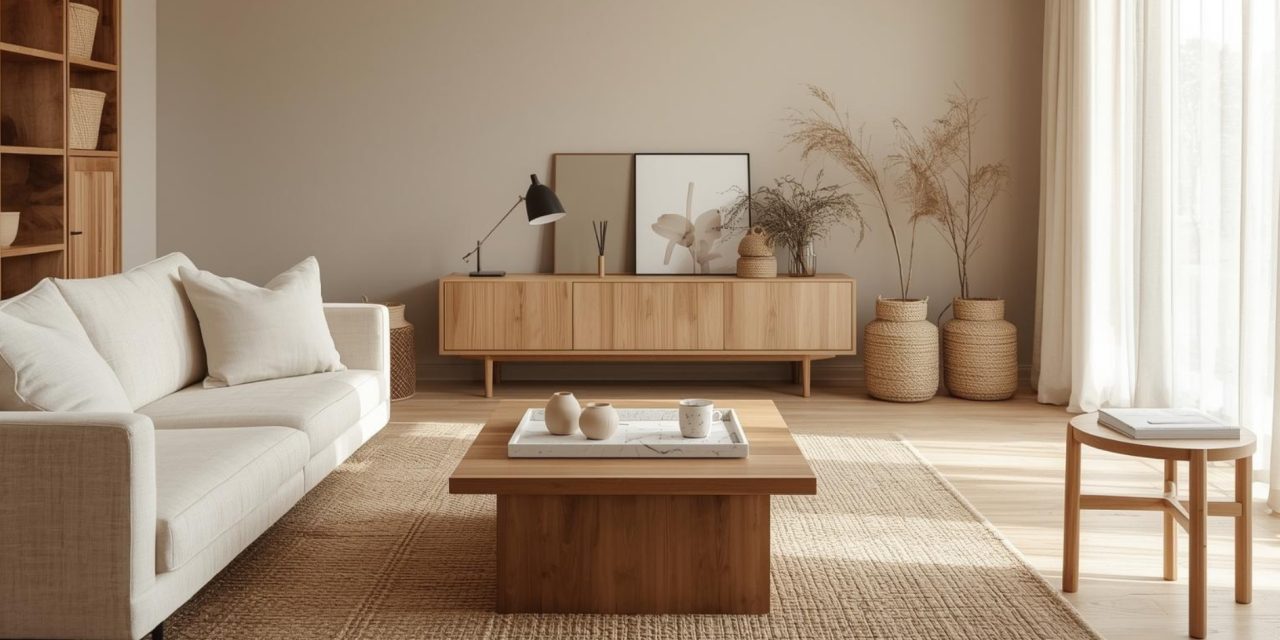
Natural finishes—think wood, linen, jute, and stone—bring depth and warmth that painted or synthetic surfaces simply can’t replicate. By replacing overly glossy or stark elements with earthy materials, a neutral home gains character, contrast, and a sense of lived-in comfort without sacrificing its minimalist aesthetic.
Earthy Material Swaps That Add Depth
Material psychology plays an important role in how interiors feel. Studies referenced by Material ConneXion show that natural textures tend to create stronger perceptions of warmth and comfort in interior spaces. For example, wood materials rank significantly higher on perceived warmth than plastics or highly polished synthetics.
A simple swap—such as replacing glossy white lacquer with warm oak veneer—can dramatically shift how a room feels. According to features in Architectural Digest, wood finishes can noticeably increase the perceived warmth of a space, particularly when paired with neutral palettes.
To build depth within neutral interiors:
- Replace high-gloss surfaces with wood or natural veneers
- Introduce oak or walnut furniture for subtle tonal variation
- Pair taupe walls with cream upholstery for layered neutrals
- Add linen fabrics or jute rugs to soften the space
These changes prevent neutral rooms from feeling sterile while still maintaining a calm, minimalist design language.
Wood Tones Over Stark White
One of the easiest upgrades is swapping stark white furniture for natural wood tones. For example, replacing a white IKEA Lack table with an oak sawhorse desk from Article instantly introduces warmth and natural texture.
Different wood types create different levels of depth within neutral spaces:
- Walnut shelves from West Elm offer rich, darker tones ideal for gray interiors
- Oak consoles from Target bring light warmth to taupe or beige walls
- Teak accents such as trays or side tables add subtle shine to cream palettes
- Bamboo shelving introduces airy texture for Scandinavian-style interiors
- Pine tables provide a softer glow that works well in budget-friendly designs
For durability, many designers recommend satin polycrylic finishes instead of wax for surfaces in high-traffic areas.
A helpful guideline when styling neutral spaces is maintaining roughly a 60/40 balance between wood elements and neutral surfaces. This keeps the room warm and layered without overwhelming the overall palette.
Layering wood with other organic textures—such as wool throws or rattan chairs—can further enhance the tactile quality of a space.
Terrazzo and Jute Accents
Smaller material accents can also introduce texture without requiring major furniture swaps. Items such as terrazzo trays or jute poufs add subtle variation that keeps neutral rooms visually interesting.
For example, terrazzo coasters from Food52 paired with a jute pouf from Serena & Lily introduce both pattern and organic texture.
Some simple accent combinations include:
- A terrazzo tray on a woven coffee table in the living room
- Seagrass storage bins on kitchen shelving
- A jute rug beneath a neutral sectional
- A terrazzo side table beside reading chairs
- Sisal coasters placed on entryway consoles
Designers often recommend limiting accent materials to 20–40% of visible surfaces. This prevents the space from feeling cluttered while still creating visual contrast.
Stone elements, ceramic vases, or woven baskets can also complement these textures, helping neutral rooms feel layered, comfortable, and intentionally designed.
Conclusion
Material choices can quietly transform neutral interiors from simple to sophisticated. By swapping stark surfaces for warm wood, woven fibers, and textured stone, homeowners can introduce depth and personality without abandoning a minimalist palette.
These small material upgrades often have an outsized effect, turning neutral spaces into homes that feel warmer, richer, and more inviting.
Which natural material instantly makes a home feel warmer to you—wood, stone, or woven textures?
Share your favorite in the comments and explore more home inspiration with You’re In Style.