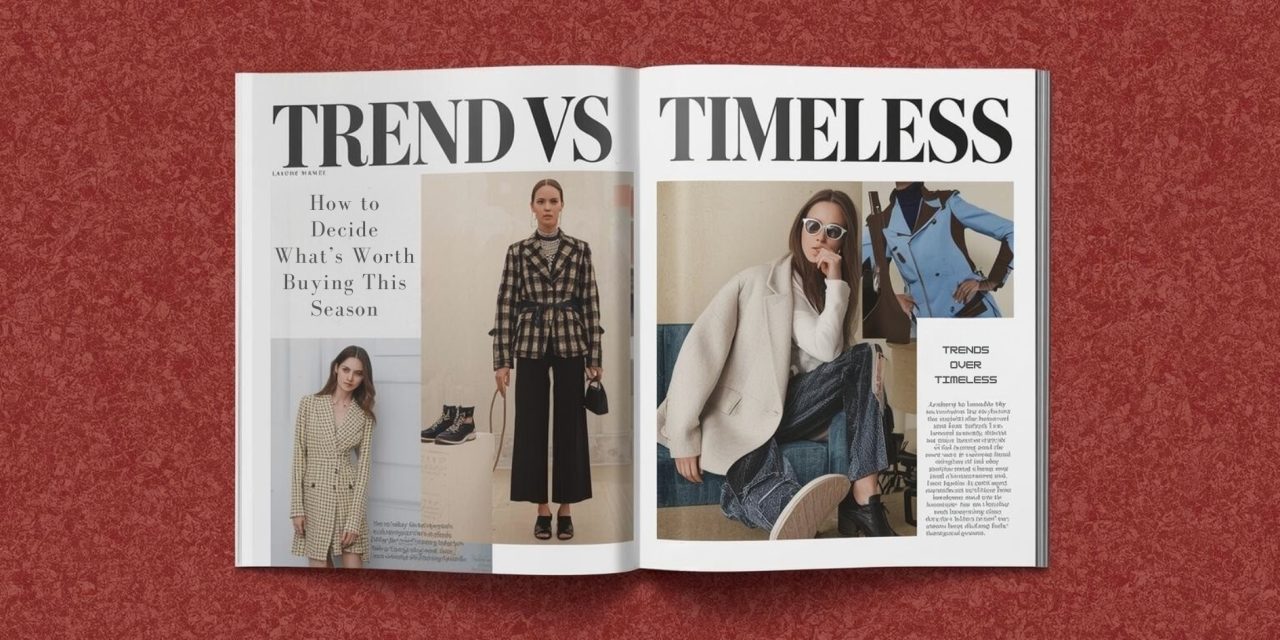
Ever splurged on a “must-have” trend, only to wonder why it’s still haunting your closet six months later? You’re not alone—fashion moves fast, but regret moves faster.
With trends cycling every season and timeless pieces promising longevity, knowing what’s actually worth buying has become a modern style skill. This guide breaks down how to spot trends versus timeless items, evaluate purchase value, and build a wardrobe that works beyond one fashion moment.
Understanding Trends vs. Timeless Pieces
Fashion trends typically rotate every three to six months, while timeless pieces—think trench coats or crisp white tees—can last five to ten years or more. Trends fuel fast fashion cycles, like the Y2K revival that surged and softened within roughly 18 months. Timeless pieces, on the other hand, act as investment staples with a consistently low cost per wear.
This distinction matters more than ever. Trend-driven shopping delivers quick excitement but often leads to clutter and waste. Timeless apparel offers long-term value, better outfit versatility, and stronger alignment with sustainable fashion choices.
More shoppers are now prioritizing durability over novelty. Capsule wardrobes built around classic staples reduce impulse buying and simplify daily dressing. The smartest approach isn’t avoiding trends entirely—it’s balancing trend-led buys with forever pieces that anchor your wardrobe.
A strategic high-low mix allows room for fun while protecting your budget. When deciding what’s worth buying, consider versatility, resale potential, and how easily an item integrates into multiple outfits. Quality over quantity remains the golden rule for long-term fashion satisfaction.
Defining Fashion Trends
Understanding the Trend Lifecycle
Fashion trends are short-lived styles driven by runway shows, influencers, and cultural moments. Most last three to eighteen months, capturing attention through seasonal colors, silhouettes, or aesthetics.
Examples include the low-rise jeans wave from the Y2K revival between 2022 and 2024, Barbiecore’s hot pink takeover in summer 2023, and the quiet luxury movement dominated by beige cashmere and minimal tailoring. These trends follow a predictable cycle influenced by fashion weeks, street style, and social media hype.
Trend Lifecycle Overview
| Stage | Duration | Description |
| Hype | 0–6 months | Initial buzz driven by influencers and media |
| Peak | 6–12 months | Widespread adoption across retail and social platforms |
| Decline | 12–18 months | Interest fades as new styles emerge |
Because most trends fade quickly, intentional buying is key. Trend forecasting can help identify short-term opportunities, but these items work best when paired sparingly with timeless wardrobe essentials.
Characteristics of Timeless Items
Timeless pieces share five defining traits:
- neutral colors
- classic silhouettes
- quality materials
- clean design
- multi-occasion wearability
These elements allow items to evolve with changing styles rather than expire with them.
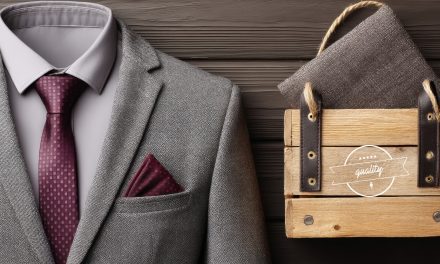
Neutral palettes like navy blazers or black trousers work year-round. Tailored fits, such as straight-leg jeans, flatter a wide range of body types. Quality fabrics—merino wool sweaters or structured cotton shirting—offer durability and comfort. Clean designs avoid unnecessary embellishment, while versatile styling allows pieces to move seamlessly from work to weekend.
Timeless items also excel in cost-per-wear math. A trench coat worn across seasons quickly outperforms a trend jacket worn twice. Closet audits help identify gaps where investment pieces make the most sense. Before buying, test how often an item could realistically be worn and how many outfits it completes.
Choosing fade-proof colors, sturdy stitching, and easy-care fabrics supports slow fashion and reduces trend fatigue. These decisions build a wardrobe rooted in longevity, not momentary hype.
Conclusion
Trends add excitement to fashion, but timeless pieces provide stability. The smartest wardrobes don’t chase every new style—they curate thoughtfully. By understanding trend cycles, recognizing timeless design, and evaluating quality and versatility, you shop with intention instead of impulse.
A well-balanced closet saves money, reduces waste, and makes getting dressed easier season after season. Style isn’t about owning more—it’s about owning better.
Have you ever bought something just because it was trending, only to never wear it again? Share your most regrettable or surprising fashion purchase in the comments, and stay tuned for more smart style insights on You’re In Style.