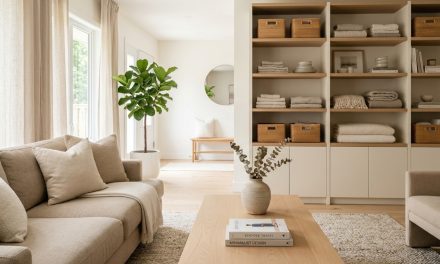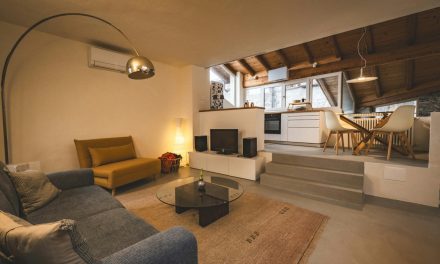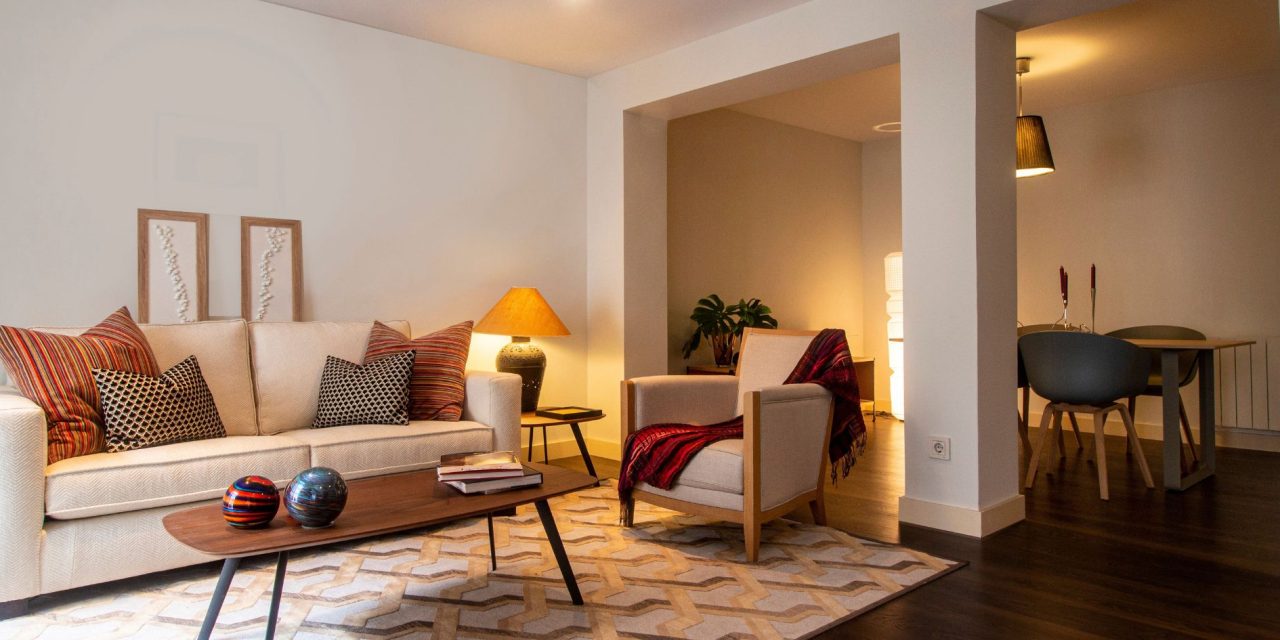
Neutral décor has a reputation for being calm, sophisticated, and timeless. It also has another reputation: looking suspiciously like nobody actually lives there.
The difference often comes down to lighting. When cream, beige, taupe, gray, and white are illuminated from just one ceiling fixture, their subtle differences can disappear. Layered lighting brings those tones back to life, adding warmth, shadows, texture, and depth without introducing a rainbow of new colors.
Build Your Lighting Layers
The easiest way to make neutral home decor feel warmer is to stop relying on one light source.
Think in three layers: ambient, task, and accent lighting.
Ambient lighting provides the general glow of the room. Recessed lights, pendants, and other overhead fixtures can create this foundation, but they shouldn’t have to do all the work.
Add task lighting around areas where you read, work, or carry out specific activities. A table lamp beside a sofa or a bedside lamp on a nightstand can make these spaces feel more intimate while remaining practical.
Finally, bring in accent lighting to highlight the details that make neutral rooms interesting. Picture lights can draw attention to artwork, while floor lamps can illuminate textured rugs, woven accessories, or architectural features.
This layered approach is particularly useful with neutrals because it creates contrast without requiring stronger colors.
A beige sofa can look completely different under a soft table lamp than it does beneath a bright overhead fixture. The same applies to taupe walls, cream furniture, white accents, and warm wood.
Choose Warm Bulbs and Add Dimmers
The bulb you choose can dramatically affect how your neutral palette looks.
Philips 800-lumen warm-white bulbs cost around $12 for a four-pack and offer a warmer 2700K tone. This can complement earthy colors, warm woods, cream upholstery, and beige walls without making the room feel overly yellow.
Try the same room with a cooler bulb and then a warm one. Suddenly, your “boring beige” may have been innocent all along.
Dimmers provide another layer of control. A Lutron Caséta dimmer can allow you to adjust brightness throughout the day, shifting from brighter practical lighting during the day to a softer evening glow.
This is particularly useful in contemporary neutral interiors where the styling relies heavily on subtle differences in tone and texture.
Instead of adding more décor to make the room feel interesting, try changing the lighting first.
Add Candlelight Without Creating a Fire Hazard
Candles can bring another kind of warmth to a neutral room. Their flickering light creates movement and soft shadows that can make simple décor feel much more atmospheric.
Place candles on coffee tables, mantels, shelves, or consoles using stable holders. Keep them well away from curtains, cushions, throws, wood, rattan, and other flammable materials.
For homes with children or pets, battery-operated candles can create a similar glow without the open flame.
Try grouping three candles at different heights to create a simple vignette. Their light can pick up details in woven baskets, macramé, textured ceramics, and other neutral accessories.
The result is subtle, but that’s exactly the point.
The Takeaway
Neutral décor doesn’t need more color to feel warm and inviting. It needs dimension.
Layer your lighting, switch to warmer bulbs, introduce dimmers, and use candlelight thoughtfully. These small changes can make beige, cream, taupe, gray, and white feel considerably richer without abandoning the neutral aesthetic that made you choose them in the first place.
Is your neutral room actually calm—or has it just been sitting under one very unforgiving ceiling light? Find more ways to bring personality, warmth, and depth to your space at You’re In Style.