Moving a sofa can sometimes do more for a room than buying another decorative cushion ever could. A few strategic layout tweaks can create new zones, improve traffic flow, and give familiar spaces a seasonal refresh.
You don’t need new furniture to make the room feel different. Rotate the sofa, reposition the coffee table, layer your rugs, or reclaim an unused corner. These simple changes can create more functional spaces while keeping your decorating budget intact.
Before moving anything, clear the room and assess how people naturally move through it. Feng shui basics recommend keeping walkways around 36 inches wide to encourage comfortable movement and better energy flow. A free Room Planner app can also help you test arrangements before lifting heavy furniture.
Gather a tape measure, notepad, and laser measurer, which can cost around $20 on Amazon. Sketch your existing setup before making changes. Precise measurements make rearranging easier and keep a beautiful plan from turning into a furniture-shaped traffic jam.
1. Create an L-Shaped Living Room
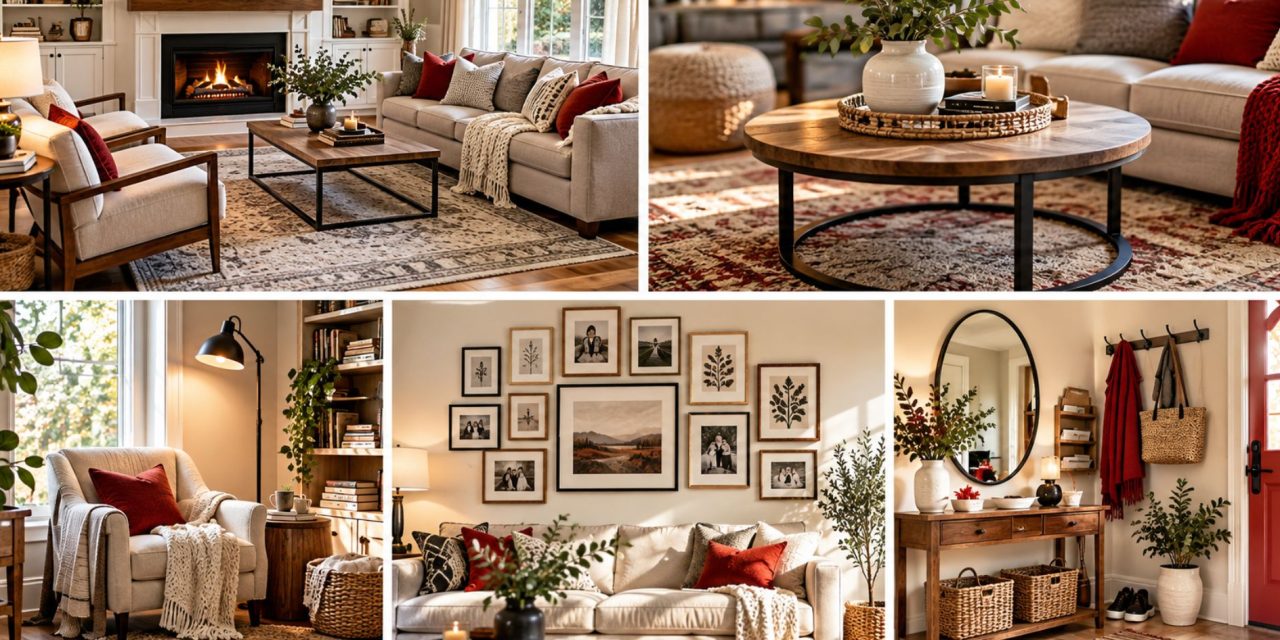
Position your sofa perpendicular to the fireplace to create an L-shaped arrangement. Place a loveseat or chairs opposite it to frame the hearth as the room’s focal point. This creates a cozy conversation area that works especially well with fall decor ideas.
Layer rugs beneath the seating to visually define the zone. Keep major walkways at least 36 inches wide for easier movement. The result is a more organized living room without purchasing new furniture.
Use the free Room Planner app to test different arrangements before moving heavy pieces. For winter home styling, angle a chair toward the fireplace for a warmer feel.
This arrangement can also make existing furniture feel more versatile. Sometimes, the furniture was never the problem; it was simply facing the wrong direction.
2. Improve Coffee Table Spacing
Place your coffee table 18 inches from the sofa edge. This distance keeps the table within easy reach while preserving enough space around the seating area. It also creates an ideal surface for tray styling, coffee table books, and candle displays.
Center the table within the L-shaped arrangement to create visual balance. Add ottoman storage underneath for blankets and other items that need to stay nearby.
Rotating the rug beneath the table can also change the room’s seasonal appearance. Try earth tones for an autumn-inspired look without replacing your existing furnishings.
Measure the distance carefully with a laser tool before settling on the arrangement. Small spacing changes can make a room feel more open and help create clutter-free zones.
3. Turn an Unused Corner Into a Reading Nook
Create a reading nook with an armchair, floor lamp, and side table in a quiet corner. Position the lamp over your shoulder to provide comfortable, glare-free lighting. Add stacked books and a throw for relaxed hygge vibes.
Anchor the area with a small rug to visually separate the nook from the rest of the room. Position the chair toward a window whenever possible to take advantage of natural light.
This arrangement can transform forgotten space into a useful, tech-free retreat. It also works well as a spring refresh when you want to introduce lighter textures and reading-focused spaces.
Use the Room Planner app to check whether the chair and table fit comfortably. During winter, add faux fur accents for extra warmth and cozy ambience.
4. Make a Gallery Wall the Focal Point
Build a gallery wall above the sofa or mantel to create a strong visual focal point. Arrange frames in a grid or cluster to introduce rhythm, variety, and personality.
Hang artwork around eye level using damage-free hooks where appropriate. Mix frame sizes to create visual interest without replacing your existing furniture.
Seasonal artwork can also help refresh the room throughout the year. Swap botanical prints, family photographs, or other pieces to support different seasonal transitions.
Measure the wall space before arranging your frames. A laser measurer can help you establish accurate spacing and prevent unnecessary holes.
The gallery wall can also become part of your storytelling decor. Family photos and meaningful artwork give the room personality without requiring a complete redesign.
5. Build an Entry Command Center
Create an entry command center using wall hooks, a mail sorter, and a calendar on or above a console table. Add a mirror to create a sense of spaciousness while keeping keys easy to find.
Use baskets for shoe storage and seasonal wreaths on the door to introduce texture and personality. This setup works particularly well for back-to-school organization or autumn nesting.
Keep walkways around 36 inches wide so the entry remains comfortable during busy moments. The goal is organization without turning the entrance into an obstacle course.
Use the free Room Planner app to test the arrangement before installing anything. Neutral tones and texture mixes, such as jute rugs, can give the space a polished finish.
Conclusion
Refreshing your home does not always require new furniture, expensive accessories, or an ambitious renovation. Rearranging what you already own can create distinct zones, improve movement, and make familiar rooms feel surprisingly different.
From an L-shaped living room to a practical entry command center, each layout offers a simple way to rethink your space. The best arrangement is ultimately the one that fits your room, routines, and personal style.
Ever wondered how different your home could feel if you simply stopped arranging the furniture the same old way?
You’re In Style explores practical home styling ideas that can turn a simple layout change into a space that feels refreshed and distinctly yours.