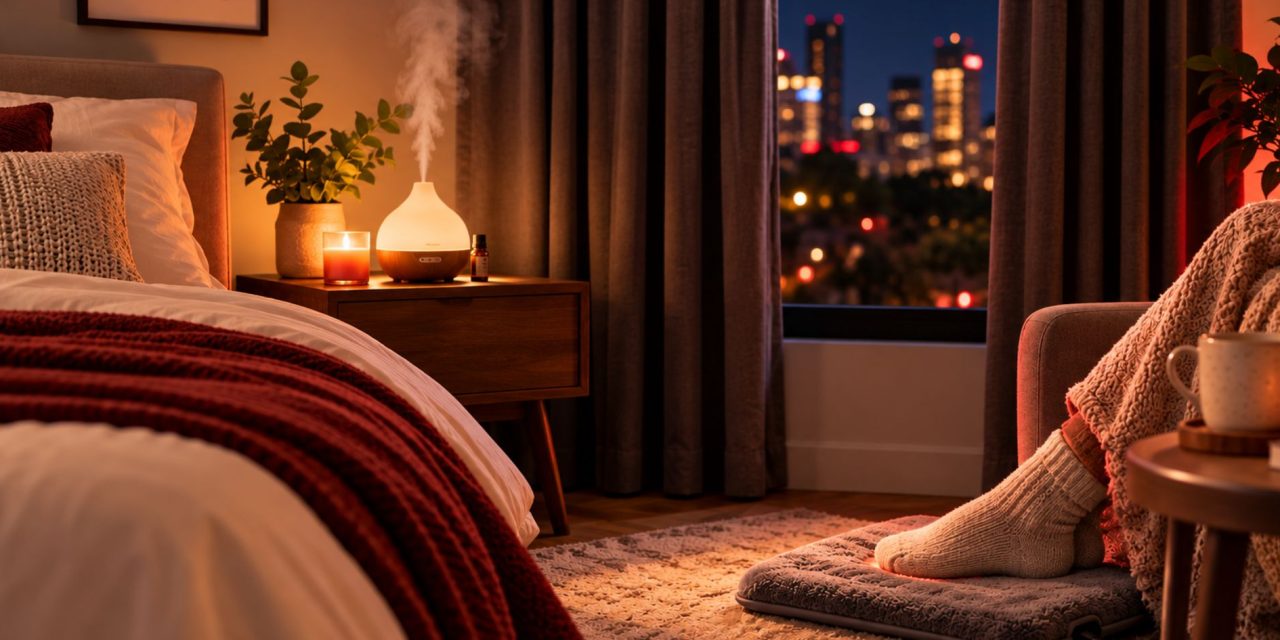
The best part of checking into a hotel isn’t always the fancy lobby or the room service. Sometimes, it’s simply sinking into a dark, quiet room, feeling warm, and finally switching off after a long day. You can recreate some of that comfort at home without booking a weekend away or replacing all your furniture.
With three affordable upgrades costing roughly $20–50 each, you can make evenings more comfortable and build a relaxing wind-down routine. Blackout curtains, an essential oil diffuser, and a heated foot mat each offer a different way to improve your space. A simple 30-day tracker can help you discover which changes genuinely make a difference.
1. Blackout Curtains for a Darker, More Restful Bedroom
Streetlights, early sunrises, and passing headlights can make a bedroom brighter than you’d like. Blackout curtains help block incoming light, making it easier to create a darker environment for sleep. They’re especially useful if your bedroom faces a busy street or gets strong morning sunlight.
A basic pair may cost around $24, depending on the size, material, and retailer. Measure your windows before buying, then choose curtains that cover the window adequately. Installation may take about 15 minutes if you already have a suitable curtain rod and basic tools.
For a more hotel-like effect, close the curtains as part of your evening routine. Track whether the darker room helps you settle down or wake feeling more rested over the following weeks. Results vary, but better light control can be a worthwhile bedroom upgrade.
2. An Essential Oil Diffuser for Calmer Evenings
A busy day can follow you straight into the living room. An essential oil diffuser can help create a more relaxing atmosphere by spreading a gentle fragrance through your space. Lavender is a popular choice for winding down, although its effects on anxiety and sleep vary between individuals.
A small diffuser may cost around $22. Place it on a stable, level surface near an outlet, then follow the manufacturer’s instructions for adding water and essential oil. Setup usually takes about 10 minutes, depending on the model.
Keep the scent subtle rather than filling the whole room with fragrance. Essential oils can irritate some people, particularly those with asthma, allergies, or scent sensitivities. Use the diffuser in a ventilated space, and stop if it causes discomfort.
To see whether it suits your routine, note your relaxation level before bed. The diffuser may become a useful signal that the workday is over and it’s time to unwind.
3. A Heated Foot Mat for Extra Warmth
Cold feet can make settling down on a chilly evening less comfortable. A heated foot mat offers a simple way to warm your feet while reading, watching television, or sitting at your desk. Depending on the model, one may cost around $28.
Choose a mat designed specifically for warming feet, and follow its safety instructions carefully. Most require little more than placing the mat correctly and plugging it in. Check the recommended heat settings and usage limits before switching it on.
Gentle warmth may make cold feet feel more comfortable, but a heated mat should not be treated as a medical circulation treatment. Avoid using one on numb skin or if you cannot reliably sense heat. Never fall asleep with it operating unless the manufacturer explicitly permits that use.
Include foot comfort in your evening notes. If the mat makes your usual reading or television time cozier, it may earn a permanent place in your nightly routine.
Track Your Comfort for 30 Days
New purchases can feel exciting at first, but the real question is whether they improve everyday life. A simple comfort tracker helps you distinguish a genuinely useful upgrade from something that looks appealing but rarely gets used.
Each evening, rate your sleep, relaxation, and foot comfort on a scale of 1 to 10. Record which upgrades you used and add a short note about anything that affected your score. Treat the ratings as personal observations, not scientific measurements.
| Period | What to track | What to look for |
| Weeks 1–2 | Daily sleep, calm, and foot-comfort scores | Establish your baseline and note which upgrades you use |
| Weeks 3–4 | Continue scoring and compare weekly averages | Identify changes and adjust your routine |
| Day 30 | Review your notes and overall scores | Keep the upgrades that genuinely help you feel more comfortable |
You don’t need every item to make a difference. Start with the problem that bothers you most, then add another upgrade only if it fits your needs and budget.
Conclusion
A more comfortable home doesn’t have to come with luxury-hotel prices. Blackout curtains can help manage unwanted light, a diffuser may create a calming atmosphere, and a heated foot mat can add warmth to chilly evenings.
The best upgrade is the one that fits your routine, feels good to use, and earns its place beyond the first week.
Luxury is sometimes just getting into bed without streetlights shining through the curtains or spending the evening with cold feet. You’re In Style brings practical home comforts and affordable lifestyle upgrades within reach, without making everyday living feel like an expensive project.