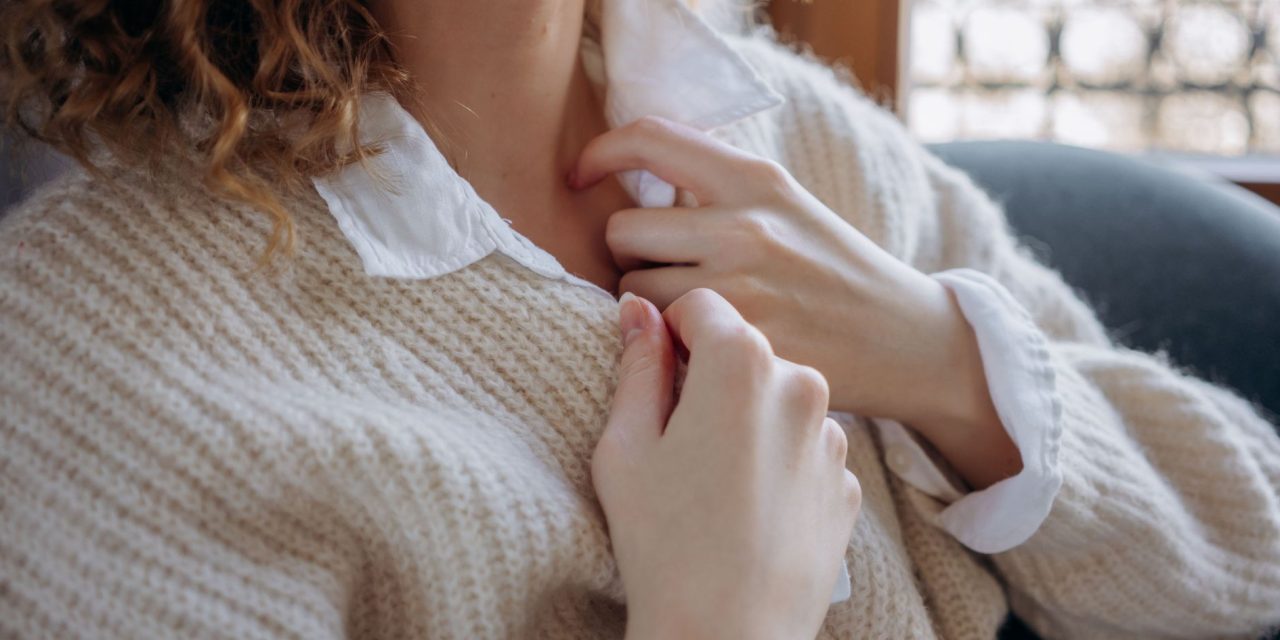
Why does your favorite sweater start growing tiny fuzz balls just when you’re getting attached to it? Before you blame the price tag or question your shopping decisions, there’s something worth knowing: even luxury wool and cashmere can pill.
Pilling happens when loose fibers tangle together after repeated friction. It’s a normal feature of many knitted fabrics, not automatic proof of poor quality. Understanding which fabrics pill, what causes it, and how to remove pills safely can help you keep your knitwear looking its best.
What Causes Pills to Form on Knitwear
Everyday movement creates friction between your sweater, your body, and other surfaces. This gradually pulls loose fiber ends toward the fabric’s surface, where they tangle into small knots called pills.
Think of each pill as a tiny knot formed by fibers that have escaped the yarn. Wearing, washing, and rubbing against furniture all contribute to the process.
That’s why pilling often appears first under the arms, around the sides, or wherever a bag strap repeatedly rubs against your sweater. These high-friction areas experience more contact during ordinary wear.
Knit structure also matters. Looser knits and lower-twist yarns can allow fibers to move more freely, making some sweaters more susceptible to pilling. Tighter constructions may resist it better, although no knit is completely immune.
Fabrics Most Prone to Pilling
Some fabrics develop pills more readily because of their fiber length, yarn construction, and how they respond to friction. Natural fibers aren’t automatically safer, and synthetic fabrics aren’t automatically worse.
Here’s how common sweater materials compare:
- Wool and merino: Soft, warm fibers can work loose through repeated friction, particularly in high-contact areas.
- Cashmere: Fine fibers can escape the yarn and form pills, especially during early wear.
- Cotton: Often less prone to noticeable pilling than some softer fibers, but repeated friction can still create bobbles.
- Acrylic and polyester: These synthetics can pill, and their pills may remain firmly attached because the fibers are relatively strong.
- Blends: Combining fibers with different lengths and properties can affect how readily a garment pills.
Fiber type alone doesn’t determine a sweater’s performance. Yarn twist, knit density, finishing, and how you wear and wash the garment all contribute.
If resisting pilling is a priority, look for tightly constructed knits and yarns made with longer-staple fibers where applicable. Check care instructions and reviews, too, rather than assuming a higher price guarantees a pill-free sweater.
What to Avoid So You Don’t Snag or Thin the Knit
Removing pills can refresh a sweater, but aggressive treatment can damage the fabric you’re trying to protect. The key is to use gentle tools and stop once the surface looks tidy.
A fabric shaver can work well when used lightly. Keep it flat against the garment and make gentle passes without pressing hard. Test it on an inconspicuous area first, especially if the knit is delicate.
Avoid cutting pills with scissors or a razor. It’s easy to catch a yarn loop and cut the structure holding the knit together. Take extra care around seams, ribbing, cuffs, and edges, where tools can snag the fabric.
A sweater comb may suit some knits, but it still requires a light touch. Stop if the yarn begins pulling or the surface starts looking fuzzy or thin.
Repeated shaving also removes fibers from the garment’s surface. Overdoing it can weaken or thin the knit, so don’t keep going simply to achieve a perfectly smooth finish.
Prevention starts in the laundry, too. Turn sweaters inside out, wash them in cold water on a gentle cycle, and use a mesh laundry bag when appropriate. Choose a mild detergent and avoid vigorous rubbing.
After washing, reshape the garment and dry it flat according to its care label. Avoid unnecessary heat and agitation, which can contribute to fabric damage, shrinkage, and additional friction.
Conclusion
Pilling doesn’t automatically mean your sweater was poorly made. It reflects how fibers behave under friction, although the amount of pilling varies with the yarn, knit construction, and care.
With gentle washing, careful pill removal, and realistic expectations, you can keep your favorite knitwear looking presentable for longer. The goal isn’t to eliminate every loose fiber; it’s to care for your clothes without wearing them out in the process.
Have you ever questioned an expensive sweater’s quality because it started pilling after just a few wears? You’re In Style helps you understand the little details behind your clothes, so you can shop smarter and care for your favorite pieces with confidence.