Online shopping makes finding your next favorite outfit easy, but getting the right size can feel like a guessing game. One brand’s medium fits perfectly, while another’s barely makes it past your shoulders. Apparently, clothing sizes enjoy keeping us humble.
The solution? Stop relying on labels and start measuring clothes you already love wearing. With a flexible measuring tape and a few reliable wardrobe favorites, you can create a personal sizing guide that makes choosing clothes online easier and more accurate.
Gather Your Best-Fitting Clothes and a Measuring Tape
Before opening another product page, gather a few garments you love and a flexible measuring tape. The soft kind used for sewing works best, but any tape that bends easily will do.
Brand sizing varies considerably. One retailer’s medium might be another’s small, while vanity sizing makes clothing labels even less reliable. Measuring garments that already fit well gives you a personal size guide you can trust.
You do not need fancy equipment or sewing skills. A measuring tape, a flat surface, and five minutes are enough to create a reusable reference for future online clothes shopping.
Which Garments to Use as Your Reference Points
Start with the clothes you reach for repeatedly. These are your best references because you already know how they fit and feel.
Choose garments that fit comfortably, without being too tight or overly loose. Avoid stretched-out or shrunken pieces, since they can distort your measurements.
Here is a simple lineup to get started:
- A well-fitting T-shirt or blouse: Use it to measure chest and waist dimensions.
- Your favorite jeans or trousers: Use them to measure hips, rise, and inseam.
- A long-sleeve top: Use it to measure sleeve length and shoulder width.
Each garment provides different information. A T-shirt helps you compare how tops fit across your chest and waist, while jeans reveal how trousers accommodate your hips and leg length.
A long-sleeve top adds details that short sleeves cannot provide, such as where the cuffs should sit on your wrists.
Using several reference garments creates a more complete picture of your fit preferences. You might also notice patterns, such as consistently needing larger sizes in certain categories or longer inseams than standard charts suggest.
Keep these garments nearby as you shop. Having reliable measurements ready makes comparing size charts easier and reduces the likelihood of frustrating returns.
How to Take Accurate Measurements From Clothes You Own
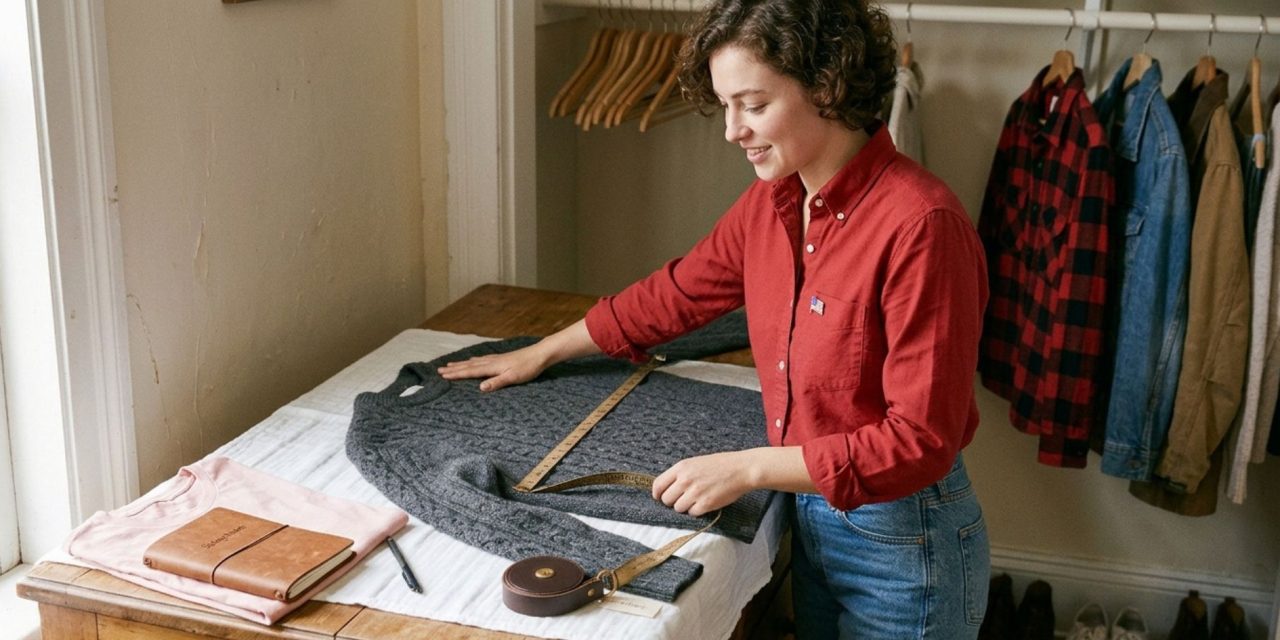
Lay your reference garment flat on a table and smooth out any wrinkles. Then, use your measuring tape to record its dimensions.
This flat-lay measurement method works because clothing size charts often provide garment measurements. Comparing those numbers with a piece you already love gives you a practical custom fit comparison.
Choose a reference garment that matches the fit you want from your new purchase. A relaxed sweater and a fitted blazer will have different measurements, so select accordingly.
You will need a flexible measuring tape, a flat surface, and a few minutes of patience. Record your measurements in your phone’s notes app for easy reference.
Measure in inches and round to the nearest quarter inch. Most US size charts use inches, making this level of precision useful for reliable garment sizing comparisons.
Measuring Bust, Waist, Hips, Inseam, and Sleeves
For bust measurements, measure straight across the chest from one armpit seam to the other. Double that number to estimate the garment’s full chest circumference.
Use the same approach for waist and hips. Here is how to measure each area:
- Bust: Measure across the chest from armpit seam to armpit seam, then double the result.
- Waist: Find the narrowest part of the garment, measure straight across, and double the result.
- Hips: Locate the widest point, usually 7 to 9 inches below the waist seam. Measure across and double the result.
- Inseam: Measure from the crotch seam to the bottom hem. Do not double this measurement.
- Sleeve length: Measure from the shoulder seam to the cuff along the outer arm.
- Shoulder width: Measure across the back from one shoulder seam to the other.
- Rise: Measure from the crotch seam to the top of the waistband.
For jeans and trousers, inseam and rise are especially important. Even a half-inch difference in rise can change where the waistband sits and affect your comfort throughout the day.
Measure each area twice to catch mistakes or uneven tape placement. If your results differ, take a third measurement and use the most consistent reading.
Remember that vanity sizing and size inconsistency vary between brands. A medium from one label might match a large from another, so trust your garment measurements over the tag.
Once you have recorded your measurements, you can compare them against online size charts with greater confidence. This simple preparation makes online clothes shopping less of a gamble and helps you choose pieces that fit the way you expect.
Shop Smarter With Your Personal Measurement Guide
Building a personal clothing measurement guide takes only a few minutes, but it can save considerable time and frustration later. Instead of guessing your size or relying on inconsistent labels, you will have real measurements from garments you already enjoy wearing.
Keep your reference measurements updated whenever your fit preferences change, or you find a better-fitting garment. With a reliable guide, choosing clothes online becomes a more informed process rather than a guessing game.
Ready to shop with fewer sizing surprises? Explore more practical fashion advice at You’re In Style and make your next clothing purchase a better fit.